
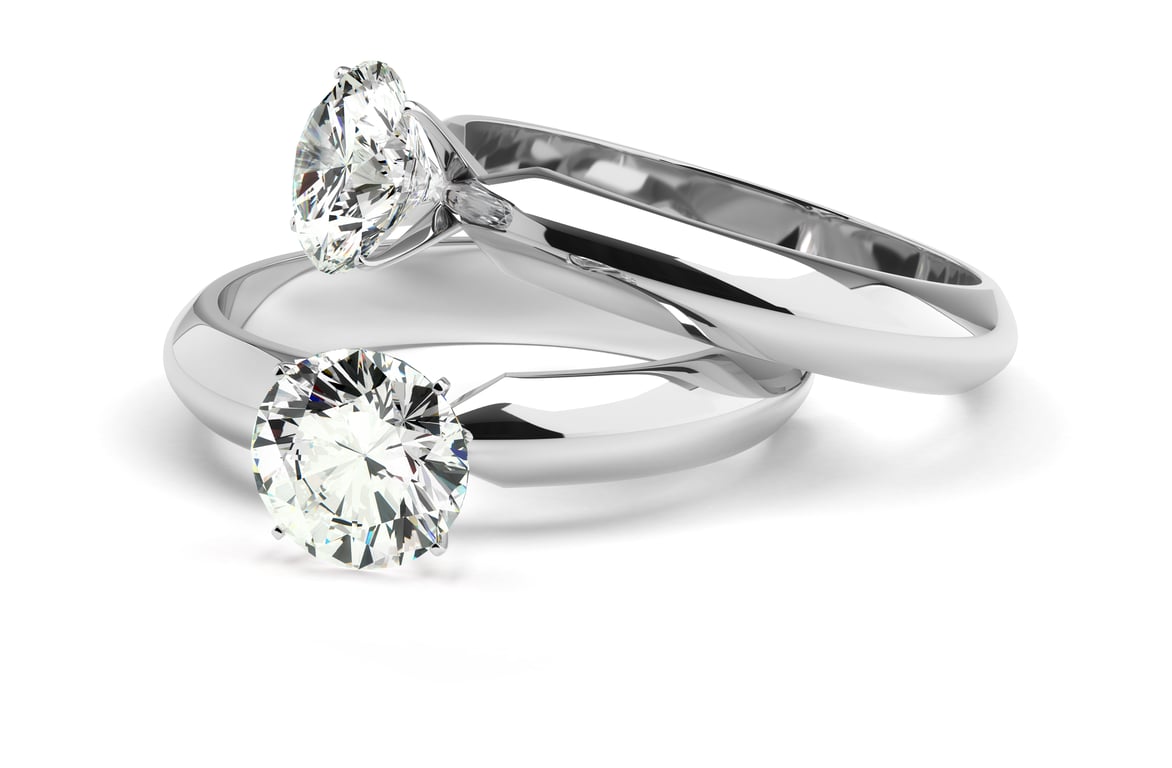
Citrine is a rather unusual and catchy name of the gemstone that, being derived from French, actually means "lemon." But why "lemon"? Because the gemstone has a number of shades of yellow. However, this precious stone has got its place in the world of high-quality jewelry and can now be seen in a wide variety of rings, earrings, bracelets, and even designer accessories.
But before getting excited about the stone, it should be said that citrine is not the diamond. Citrine is quartz that can be polished and worn just like diamond, in the round and oval shapes, and it has the hardness of 7 on the Mohs scale. But still, it is quartz, not diamond.
And the question here is what is so remarkable about the gemstone? What makes one choose it, how to recognize citrine among other stones? The comparison of the stones will help you decide which of the gems suits your needs.
Types of Citrine
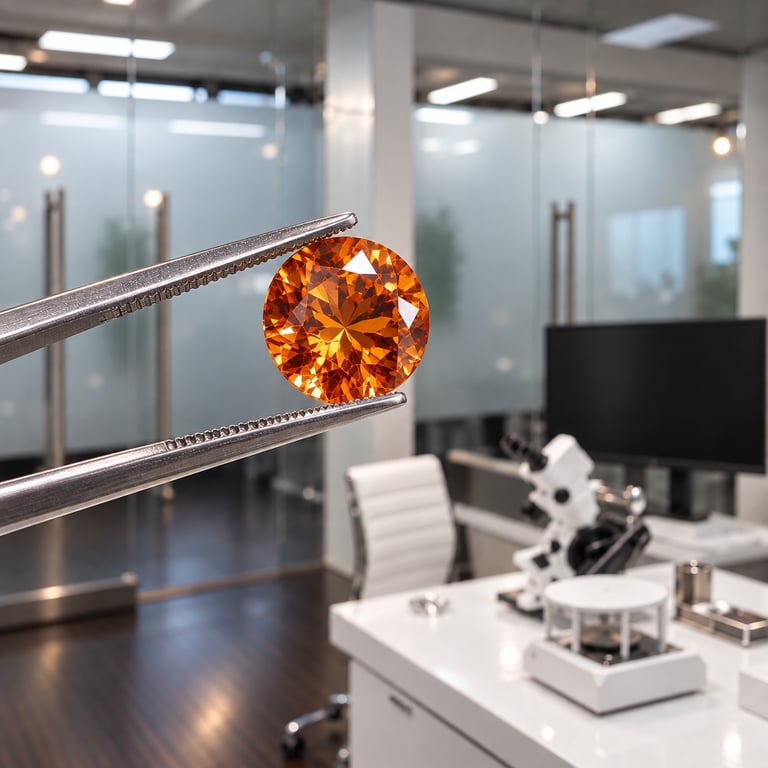
As is the case with diamonds, citrine may be formed in diverse manners. The gemstone can be natural or man-made. However, even when it is created within the confines of a laboratory, there are several methods of doing so, all based on what is required.To help you choose the citrine that best suits your budget, we will examine the most popular varieties and compare their costs per carat.
| Type | How It Is Produced | Typical Color | Average Price per Carat |
| Natural Citrine | Naturally colored citrine quartz | Pale yellow, golden yellow, yellow-orange, reddish-orange | $50–$100 |
| Heat-Treated Citrine | Citrine produced by heating natural amethyst | Golden yellow, orange, reddish-orange, Madeira | $10–$30 |
| Madeira Citrine | Deep orange to reddish-orange citrine, regardless of origin | Deep golden, orange, reddish-orange | $30–$100+ |
| Lab-Grown Citrine | Laboratory-grown citrine quartz | Yellow to yellow-orange | $5–$20 |
| Citrine Imitation | Non-citrine material made to resemble citrine | Usually yellow or orange | <$5 |
Natural Citrine
Natural citrine is relatively rare mineral that is hard to find in nature. In comparison to artificial ones, natural citrine has specific properties, such as less brownish coloring, and these exact properties contribute to the rarity and value of the mineral.
One should add that natural citrine belongs to the group of quartz (SiO2). It emerges in the Earth's crust as quartz crystallizes in rocks and obtains its unique coloring. Natural citrine enjoys a prestigious place among jewelry products for the unique golden-lemon color that is well suited for the golden engagement rings.
Heat-Treated Citrine
It is necessary to immediately clarify that such citrine cannot be considered a counterfeit stone and even the quartz used in this case is not artificial. This is real citrine—it simply gets its color through heat treatment. Let us remember that the majority of citrine found in jewelry is achieved in exactly this way.
Natural amethyst is the base mineral for citrine formation. What is it that makes amethyst appropriate for this process? The fact is that both citrine and amethyst are varieties of quartz (SiO₂) and during heat treatment, it undergoes transformation from one mineral to another, receiving the required coloring.
Madeira Citrine
Madeira Citrine is not a mineral on its own not does it involve any special manufacturing process. Instead, Madeira Citrine is a trade name given to a certain kind of citrine. What makes it special is its deep, golden-orange or honey-colored appearance, reminding of a bottle of Madeira wine, after which it is named.
Madeira Citrine can be manufactured through the heat treatment of amethyst, but there also exists a natural citrine of this color (although extremely rarely). So why is Madeira Citrine worth mentioning as an individual stone in our blog when it is simply a commercial variety of citrine? There is a simple reason – it is the best quality one and therefore is more expensive.
Lab Grown Citrine
Laboratory-grown citrine is synthetic quartz that is grown in the lab conditions. Although the crystal structure and the chemical composition of the mineral resemble the same properties of quartz, the crystal itself is grown in the laboratory, not in the natural geological conditions.
However, unlike diamonds, the name of laboratory-grown citrine is used in the market less often than the name for the diamonds. Moreover, most of the citrine on the market nowadays is the heat treated amethyst, but not the quartz that was grown in the laboratory.
Regarding the visual aspect, laboratory-grown citrine may look the same as the natural one, however, its market value is considerably lower due to the rarity of the stone.
Citrine Imitation
Those materials which have similar visual characteristics to citrine, but which are not actually citrine, are referred to as citrine imitations. Citrine imitations include glass and synthetic corundum that are widely used in cheap jewelry due to the fact that they possess the desired yellow/orange color at reduced costs.
The main feature of imitation is its non-naturalness. That is why one should always pay attention not only to the color and appearance of the stone but also to its origin and gemological certificate.
Citrine vs. Diamond: Comparing the 4Cs
| 4Cs | Diamond | Citrine |
| Color | For colorless diamonds, graded from D (colorless) to Z. Fancy-color diamonds use a separate color-grading system. | Evaluated by hue, tone, saturation, and color uniformity. Common colors range from pale yellow to golden, honey and other. |
| Clarity | Graded from Flawless (FL) to Included (I3) based on inclusions and blemishes visible under 10× magnification. | Evaluated mainly by transparency and the presence, size, and visibility of inclusions. The diamond FL–I clarity scale is not normally used. |
| Cut | A major quality factor. For round brilliant diamonds, GIA grades cut from Excellent to Poor. | Evaluated based on proportions, symmetry, polish, transparency, and how effectively the cut displays the stone's color and brilliance. |
| Carat | Measured by weight. 1 carat = 0.2 grams. Price generally increases significantly with 4Cs. | Measured by weight. 1 carat = 0.2 grams. |
Color
All things considered, 4Cs (color, clarity, cut, and carat) were primarily intended for diamond grading and can hardly be applied to citrine assessment in their full capacity. For example, there is no universally accepted D–Z color grading chart for citrine like in case of diamonds since citrine is actually a kind of colored quartz and its appeal greatly depends on its color: pale yellow and lemon yellow, golden, honey, orange and reddish-orange.
Clarity
The VVS, VS, and SI scales that are used to grade clarity of diamonds cannot be directly applied to citrine. In case of citrine, more attention should be paid to transparency of the stone, amount and visibility of its inclusions, uniformity of the material, fractures and transmission of light.
Cut
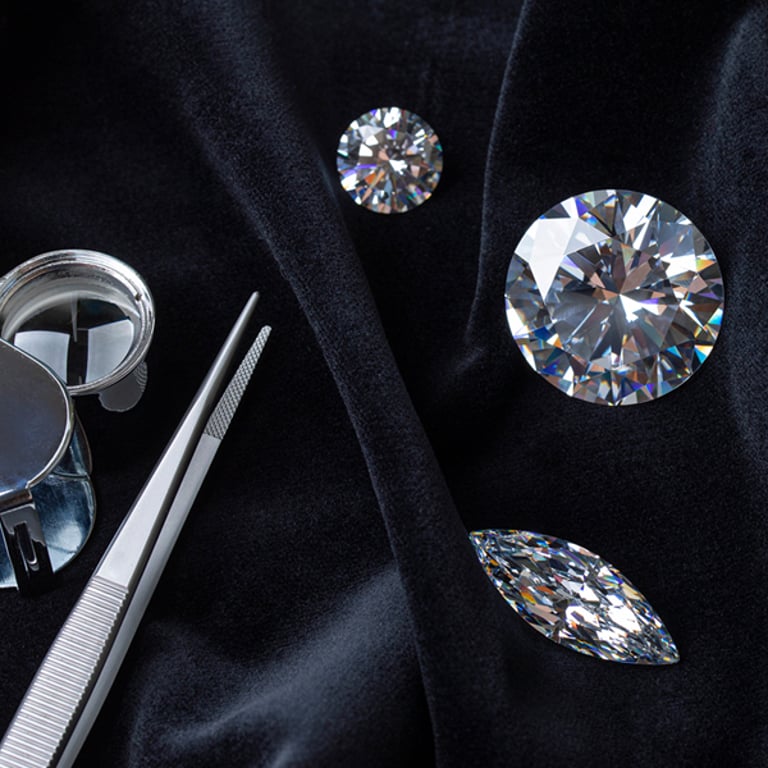
It is possible to shape citrine stones in a huge variety of gorgeous forms such as round, oval, cushion and so on. Nevertheless, it does not mean that cut quality of citrine stones can be estimated according to the GIA cut grading scale (Excellent, Very Good, Good, Fair, and Poor). Estimation of cut (more then in our blog - Cuts and Shapes) quality of citrine stones should include such factors as proportions, symmetry, polish, workmanship and reflection/transmission of light.
Carat
The easiest 4Cs characteristic to compare is carat weight since it uses one and the same measurement unit. So one carat (ct) equals 0.2 grams whether the stone is a natural diamond, a lab-grown diamond or citrine. Nevertheless, the same carat weight does not presuppose the same cost.
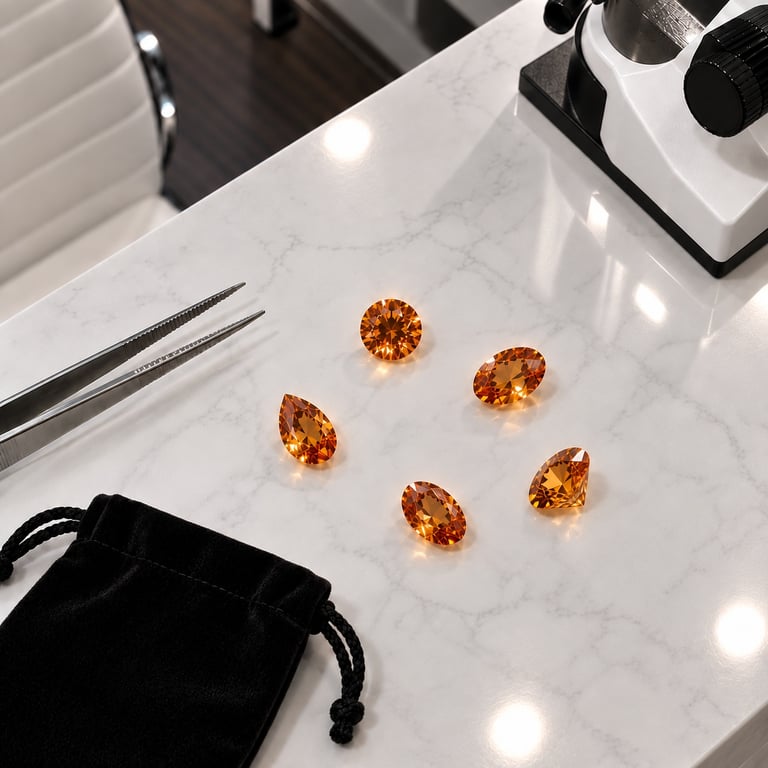
Citrine vs. Lab-Grown Diamond
| Characteristic | Lab-Grown Diamond | Citrine |
| Gemstone Type | Diamond | Variety of quartz |
| Chemical Composition | Carbon (C) | Silicon dioxide (SiO₂) |
| Crystal Structure | Cubic diamond | Trigonal quartz |
| Origin | Grown in a laboratory using HPHT or CVD technology | Natural, heat-treated, or laboratory-grown |
| Color | Usually colorless to near-colorless; can also be produced in fancy colors | Yellow, lemon, golden, honey, orange, reddish-orange |
| Hardness | 10 on the Mohs scale | 7 on the Mohs scale |
| Brilliance | Very high brilliance and strong light performance | Glassy luster with moderate brilliance |
| Durability | Excellent durability and highly resistant to scratching | Good for jewelry, but more susceptible to scratches |
| Typical Jewelry Use | Engagement rings, wedding rings, earrings, pendants, and fine jewelry | Rings, earrings, pendants, bracelets, and fashion jewelry |
| Typical Price per Carat | $15–$70+ | $500–$700 |
| Main Appeal | Diamond appearance, high durability, and strong brilliance | Warm natural color and affordability |
* Prices vary depending on carat weight, cut, color, clarity, and certification. Shop lab-grown diamonds in our collection to compare different stones and find the right diamond for your budget.
From the comparison made, it is clear that citrine and lab-grown diamond are very distinct types of gemstones with major distinctions in terms of composition, hardness, brilliance, durability, and cost. Citrine is quartz-based gemstone whose hardness is 7 and whose main value lies in its orange-yellow color, clarity, and relatively low cost. In contrast, lab-grown diamond is a diamond with the same chemical structure as the natural diamond. Its hardness is 10, brilliance, and high scratch-resistance make it well suited for jewelry meant for daily use.
In summary, thus, the key point is not so much about the price but about the type of the gemstone and its characteristics. Thus, the citrine stone may be interesting for the customers who prefer warm color and who look for the larger gemstone at a relatively cheaper price while the lab-grown diamond has all the qualities of a diamond. Both stones can be used for jewelry but both fulfill distinct functions.
Best Citrine Engagement Ring: How to Choose the Right One
A citrine engagement ring is a unique variation of an engagement ring, for people who prefer to have a warmer gemstone as the center of their jewelry. The affordable cost of the gemstone will enable the buyer to pick a bigger citrine as the center stone and spend more money on the design of the ring.
The most significant aspects that play an important role in picking up a citrine engagement ring are color. Color is one of the first aspects that should be considered, as it provides the basis for choosing a stone. In particular, one should look at the uniformity of the body color, the transparency of the gemstone. It is essential to avoid stones with visible inclusions, internal fractures and uneven color. Cut is another very important aspect, which is supposed to provide the proper proportions, symmetry and polishing, allowing the citrine to reflect light better.
One can also coordinate the color of the citrine stone with the chosen metal of the engagement ring. For example, golden-yellow and honey citrine perfectly combine with yellow gold, while orange and reddish-orange go well with white gold or platinum. For people who would like to highlight the warm tones of the gemstone, rose gold is another option. Some of the most popular engagement ring designs are solitaire, halo, three-stone, and vintage, but the buyer should not forget about the protection provided by the setting.
Citrine Solitaire Engagement Ring
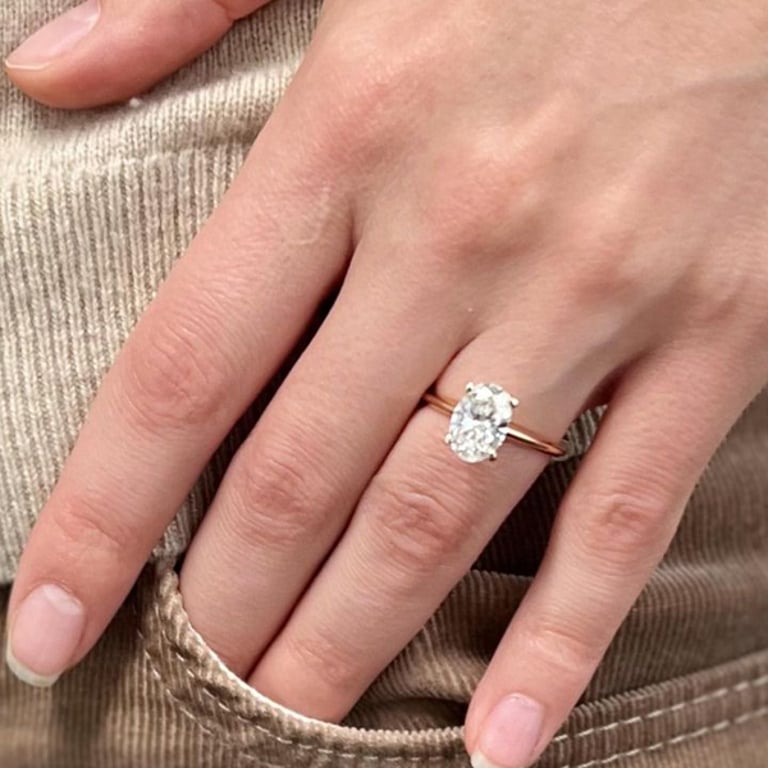
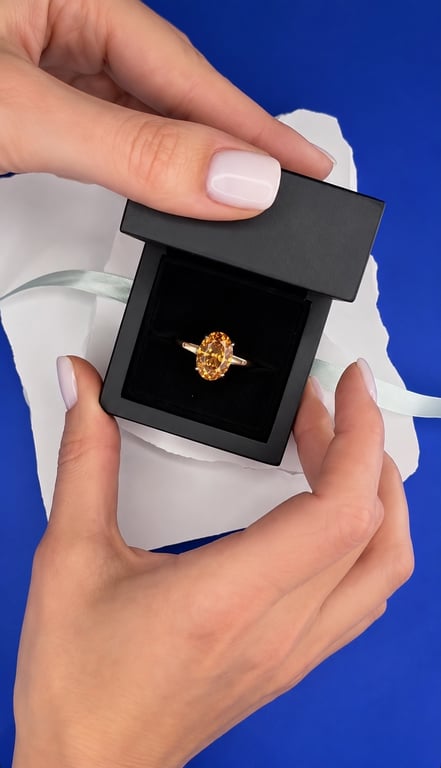
In a Solitaire citrine engagement ring, there is only one central gemstone which is the main focal point without any halo and side stones around it. The absence of any additional stones in this setting highlights the beauty of the colored citrine making it more prominent. As there is no surrounding stones, the center stone must be perfectly cut in oval, cushion, pear or round shapes in order to create elegant look and the choice of yellow, white, rose gold or platinum will drastically differ the entire ring. In this setting the quality of citrine gemstone is vital since it is all visible and exposed.
Citrine Halo Engagement Ring
The design of Halo citrine engagement ring includes a circle of smaller gemstones surrounding the center citrine. Colored citrine and colorless diamonds in halo setting can bring a very luxurious look into the engagement ring. The Halo setting will be particularly effective for cushion, oval and round citrines since surrounding stones will highlight their shape and make center gemstone even bigger. The size and number of halo stones will be determined by the designer and must be balanced in order to create harmony with the center stone.
Citrine Under Halo Engagement Ring
Another interesting setting is Under Halo. This setting includes placing of smaller gemstones under the main citrine. This particular design is not seen from the top view and it is designed to create more sparkle when viewing from the side view. In case of citrine engagement ring the under halo is a great solution for adding details in order to increase the interest to the engagement ring without taking away from the beauty of the citrine's color.
Citrine Engagement Ring with Side Stones
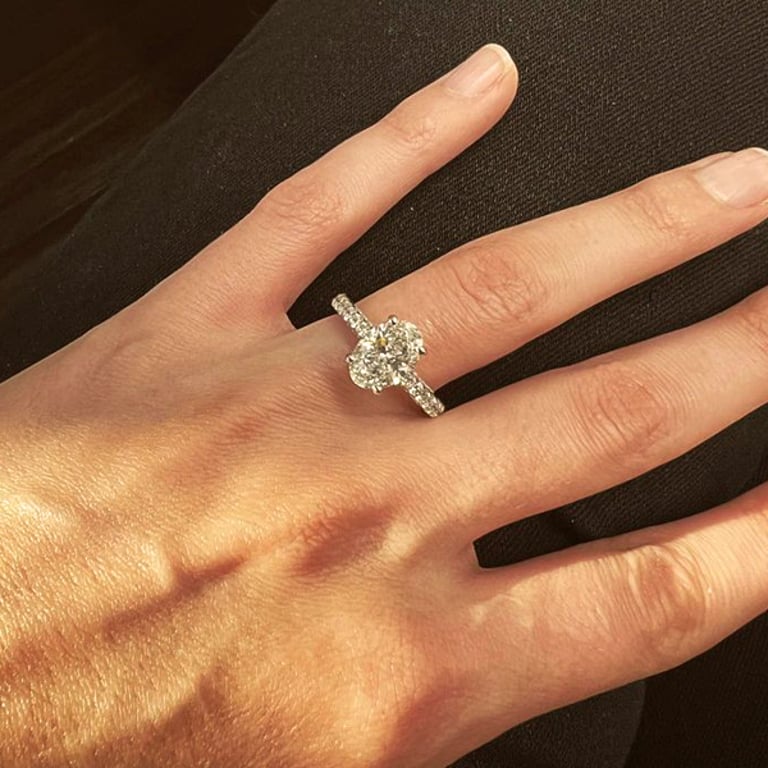
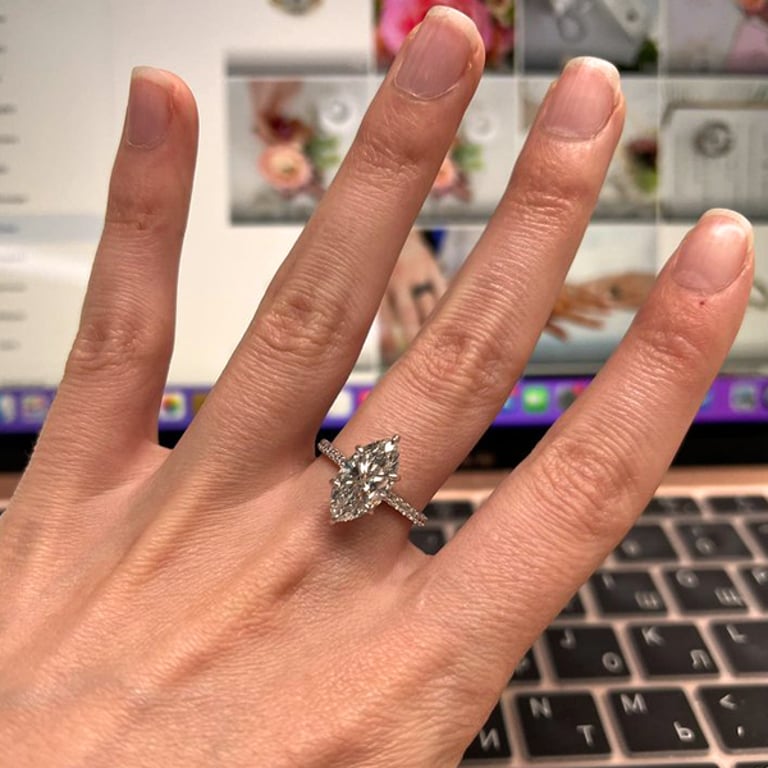
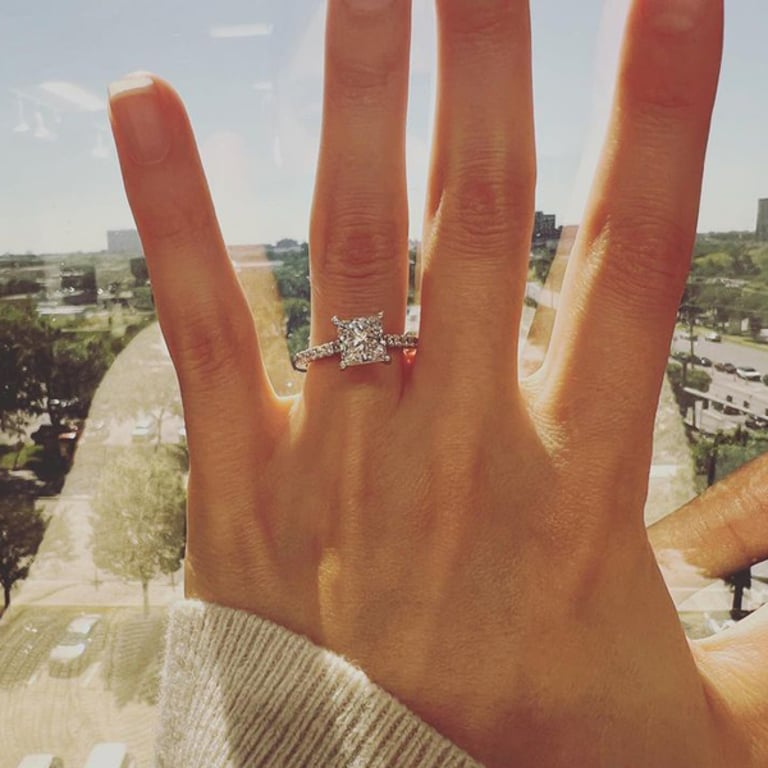
The Side Stones ring setting includes the addition of small gemstones on the shoulders of the ring, creating an opening around the center stone. The diamonds are generally chosen as side stones, although different types of gemstones may also be chosen depending on the desired design. Side stones may increase the brilliance of the ring and help in achieving a good transition from the center gemstone to the metal. The Side Stones ring setting is ideal for oval, emerald, radiant, and cushion-cut citrines.